


What James Nestor’s Breath Taught Us About the Most Overlooked Health Crisis of Our Time
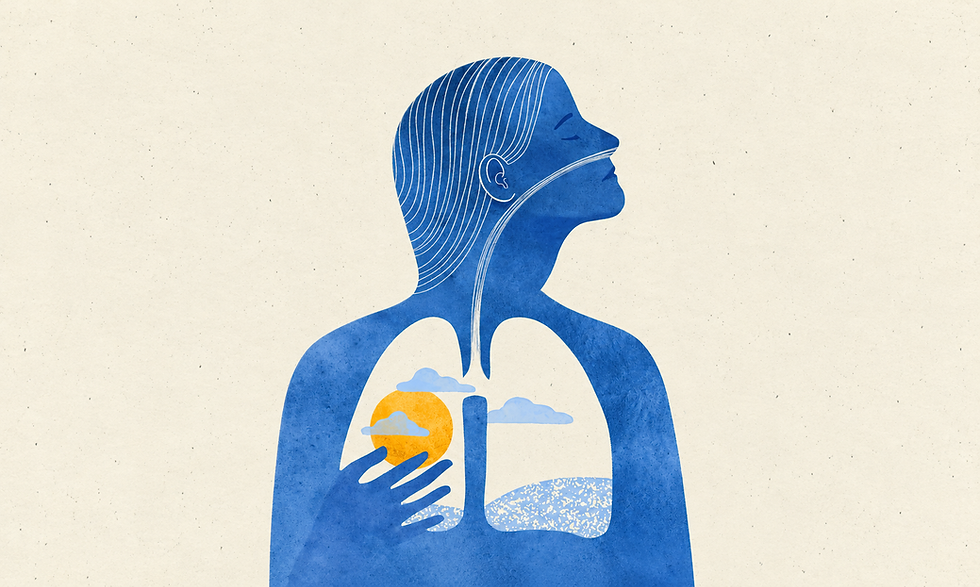
“Shut your mouth and save your life.” — George Catlin, 19th century American explorer, painter, and early advocate of nasal breathing, whose 1869 pamphlet of the same name predated modern breathing science by 150 years — and turned out to be right about almost everything.
A Book That Changes How You Think About Something You Do 25,000 Times a Day
Most people do not think about breathing. It happens without instruction, without effort, without any conscious involvement — and that, James Nestor argues in his landmark 2020 book Breath: The New Science of a Lost Art, is precisely the problem.
Nestor spent a decade researching the science of breathing: visiting researchers, freediving instructors, pulmonologists, yogis, and ancient archives. What he found was both alarming and, in a strange way, hopeful. Alarming because the evidence suggests that a significant portion of chronic disease — from sleep apnea and cardiovascular problems to anxiety, cognitive decline, and dental disease — traces back to something as fundamental and correctable as how we breathe. Hopeful because the solution, in many cases, requires no medication, no surgery, and no
expensive intervention. It requires learning, or relearning, something the body already knows how to do.
We read this book. We thought about it carefully. And we want to share what it means from the perspective of a holistic dental practice — because the jaw, the airway, the nose, and the teeth sit at the exact anatomical center of everything Nestor is writing about.
How We Forgot How to Breathe — and What the Skulls Tell Us
George Catlin spent years in the early 19th century traveling among indigenous populations across North America and South America, documenting their lives in extraordinary detail. One observation recurred so consistently that he eventually wrote a pamphlet about it: these populations had almost universally perfect teeth, wide nasal passages, and breathed exclusively through their noses. They also had almost no chronic disease of the kind that plagued their European contemporaries.
Catlin attributed this, correctly as it turned out, to nasal breathing. His pamphlet — Shut Your Mouth and Save Your Life — was largely ignored by the medical establishment of his time.
A century and a half later, researchers examining skulls from the same period confirmed what Catlin had observed. Ancient human skulls consistently show wide nasal apertures, broad palates, and well-developed jaws. Modern skulls — from the last few hundred years, as diets became softer and processed food replaced the tough, fibrous diet of our ancestors — show something markedly different: narrower jaws, more crowded teeth, constricted nasal passages, and airways that are structurally compromised before a person ever develops a bad breathing habit.
The mechanism is straightforward. The human jaw and palate develop in response to mechanical forces — chewing, biting, the pressure of the tongue resting against the roof of the mouth. Softer diets reduce those forces. The jaw narrows. The palate narrows with it, raising the floor of the nasal cavity and reducing the space through which air must pass. The airway constricts. And the body, seeking air by whatever route is available, begins to breathe through the mouth.
This is where the cascade begins.
What Mouth Breathing Actually Does

Forty percent of today’s population suffers from chronic nasal obstruction. Approximately half of us are habitual mouth breathers. Most have no idea that this is a clinical problem rather than a personal quirk.
The nose is not simply an alternative route for air. It is a sophisticated biological system designed specifically for the task of breathing, performing functions the mouth cannot replicate. It filters incoming air through mucous membranes and tiny hair-like cilia. It warms and humidifies air to the precise temperature and moisture level the lungs require. It produces nitric oxide — a molecule that increases oxygen absorption by 18%, regulates circulation, supports immune function, and influences mood. Nasal breathing increases nitric oxide sixfold compared to mouth breathing. Humming, which creates turbulence in the nasal passages, releases nitric oxide at fifteen times the resting nasal rate.
The mouth does none of this. When air enters through the mouth, it arrives cold, dry, unfiltered, and nitric-oxide-depleted. The soft tissues at the back of the throat relax under reduced pressure, narrowing the airway further. Over time, the face itself can change — Nestor documents experiments with rhesus monkeys whose nasal passages were obstructed, causing measurable facial deformation within two years, which reversed when normal breathing was restored.
A Japanese study found that rats forced to breathe through their mouths developed significantly fewer brain cells in the hippocampus — the brain’s primary memory and learning center — and took twice as long to navigate mazes as nasal-breathing controls. The implications for human cognitive function are difficult to ignore.
Sleep, the Airway, and the Night Nobody Is Watching
The consequences of mouth breathing are nowhere more dramatic than during sleep — and nowhere more commonly missed.
Nestor documented this in his own body. For ten days, he and a colleague had their nostrils plugged, forcing exclusive mouth breathing. Within days, both developed obstructive sleep apnea, blood pressure spikes, fragmented sleep, and significant daytime stress. When the experiment switched to nasal-only breathing — including taping the mouth shut at night to enforce it — the sleep apnea resolved, blood pressure dropped, heart rate variability improved dramatically, and both subjects reported sleeping better than they had in years.
During sleep, the muscles of the throat and soft palate relax. When the airway is already narrowed — by a constricted jaw, a high-arched palate, a tongue that falls back when the body relaxes, enlarged tonsils or adenoids, or simply the habit of breathing through the mouth — that relaxation can cause the soft tissues to collapse inward, partially or completely blocking airflow. The brain detects the oxygen drop, triggers a stress response, and wakes the body just enough to restore breathing. This cycle can repeat dozens or hundreds of times per night, and the person sleeping through it may remember none of it — only the fatigue, the morning headaches, the jaw tension, and the inexplicable feeling of never being fully rested.
This is obstructive sleep apnea, and it affects an estimated one billion people worldwide. Most are undiagnosed.
Mouth taping — applying a small piece of medical tape or a specifically designed strip across the lips at night to gently encourage nasal breathing during sleep — is one of the simplest interventions Nestor explores. It is not a solution for severe sleep apnea, which requires medical evaluation and treatment. But for the many people whose nighttime mouth breathing is habitual rather than anatomically forced, it can make a measurable difference in sleep quality, snoring, and morning energy.
The Airway Passes Directly Through the Mouth
The airway passes directly through the mouth. Which means the dentist is often the first clinician positioned to see what is happening there.
The jaw, the palate, the tongue, the soft palate, the tonsil region — all of the structures that determine whether the airway stays open during sleep are structures that dentists examine at every appointment. The 3D cone beam CT scanning we use at Dr. Rossinski Dental Health gives us something that most medical screenings do not: a complete three-dimensional image of the airway itself — its volume, its narrowest point, its anatomical vulnerabilities — alongside the teeth, the jaw, the sinuses, and the surrounding bone.
Airway screening is not yet standard in most dental practices. We believe it should be. The signs of compromised breathing are frequently visible in the mouth long before a patient has been formally diagnosed with sleep apnea or even identified it as a concern: a high-arched narrow palate, a scalloped tongue indicating chronic tongue-bracing against the teeth, worn enamel from nighttime grinding, enlarged tonsils visible on imaging, a tongue-tie restricting normal tongue posture. These are not incidental dental findings. They are airway findings, and they deserve to be named as such.
The American Dental Association formally recognized this in 2017, establishing a policy that all dentists should be screening patients for sleep-disordered breathing. The dentist, the ADA stated, is uniquely positioned to identify these patterns early — before they progress to the cardiovascular, metabolic, and neurological consequences that untreated sleep apnea produces over years and decades.
The Perfect Breath — and How to Practice It
Beyond the airway and the sleeping hours, Breath offers something practically actionable for every waking moment: the science of breathing rate and rhythm.
Nestor synthesizes decades of research from traditions as diverse as Zen Buddhism, Hindu pranayama, Christian contemplative prayer, and modern cardiology to arrive at a remarkably consistent finding. The optimal breathing rate for human health — the rate at which oxygen absorption is maximized, carbon dioxide is properly regulated, the autonomic nervous system is balanced, and the heart enters its most coherent and resilient rhythm — is approximately 5.5 breaths per minute. Inhale for 5.5 seconds. Exhale for 5.5 seconds.
This is what researchers call coherent breathing, or resonance frequency breathing, and it has one of the most robust evidence bases of any breathing intervention in the literature. At 5.5 breaths per minute, the body’s baroreflex — the mechanism that regulates blood pressure — synchronizes with the breathing cycle. Heart rate variability, the beat-to-beat variation in heart rhythm that is one of the strongest predictors of cardiovascular health and stress resilience, reaches its maximum. The parasympathetic nervous system — the rest-and-digest branch that governs recovery, immune function, and emotional regulation — is most fully activated.
Five and a half seconds in. Five and a half seconds out. That is the entire technique.
HeartMath, Heart Coherence, and the Inner Balance App
The HeartMath Institute has been studying cardiac coherence — the measurable state that coherent breathing produces in the heart’s rhythm — for over three decades. With more than 400 peer-reviewed studies behind it, HeartMath’s research has documented that heart coherence is not merely a feeling of calm. It is a physiologically distinct state in which the heart, brain, and nervous system synchronize in a way that improves cognitive performance, emotional regulation,
immune function, and resilience under stress.
The Inner Balance sensor and app, developed by HeartMath, make this science personally accessible. A small sensor clips to the earlobe and connects via Bluetooth to the app, measuring heart rate variability in real time at 500 times per second — a level of precision that provides immediate, accurate feedback on the state of the nervous system. The app guides breathing through a pacing animation and displays a coherence score, showing the user in real time whether their nervous system is moving toward or away from the coherent state.
Most users can achieve coherence on demand within two to three sessions of practice. The skill, once learned, becomes available without the sensor — a portable, cost-free, medication-free way to shift the nervous system’s state at any moment of the day. For patients managing chronic stress, anxiety, TMJ dysfunction, sleep disruption, or any of the conditions that trace back to a nervous system that cannot fully exit its stress response, this is a meaningful tool with a serious scientific foundation.
Practical Starting Points
For anyone who has read this far and wants to begin, the entry points are straightforward.
Nasal breathing during the day. This sounds obvious, but for habitual mouth breathers it requires active attention at first. The more consistently you breathe nasally during the day, the easier nasal breathing during sleep becomes, and the less likely the airway is to obstruct when the muscles relax.
Alternate nostril breathing. A technique from yogic tradition that Nestor describes in detail: closing one nostril with the thumb, inhaling through the other, then switching and exhaling. This practice works with the nasal cycle — the natural alternation between left and right nostril dominance that the nose maintains throughout the day — and has been shown to influence autonomic nervous system balance, blood pressure, and cognitive function.
Humming. Fifteen times the nitric oxide release of normal nasal breathing. Even a few minutes of deliberate humming — during a commute, during a walk — delivers a meaningful dose of a molecule the body uses for circulation, immunity, mood, and oxygen delivery.
Mouth taping at night. A small piece of medical tape or a purpose-designed strip placed across the lips before sleep to encourage nasal breathing throughout the night. For people who wake with dry mouth, frequent thirst, or morning fatigue despite adequate sleep hours, this is a reasonable and low-risk first experiment.
Coherent breathing practice. Five and a half seconds in, five and a half seconds out, for ten minutes a day. With or without the Inner Balance sensor, this is the most evidence-supported breathing practice available and the one with the broadest range of documented benefits.
What the Mouth Has to Do With All of It
We are a dental practice. But we have never been a practice that treats the mouth as an island.
The jaw shapes the airway. The airway determines how we sleep. How we sleep determines how we recover, how we regulate stress, how our immune systems function, and how our brains consolidate memory and learning. The teeth show the history of a breathing pattern — in the wear patterns of nighttime grinding, in the shape of a high-arched palate, in the scalloping of a tongue that has spent years bracing against the lower teeth because it has nowhere else to go.
George Catlin saw this in indigenous populations across two continents in the 1830s. James Nestor documented it in laboratories, archives, and his own body nearly two centuries later. The connection between the mouth and the breath, and between the breath and almost everything else, has been visible for a very long time. We are simply, finally, paying attention to it.
To book your breath and airway consultation with Dr. Rossinski, contact us at (212) 673-3700 or inform@rossinski.com.
References
1. Nestor, James. Breath: The New Science of a Lost Art. Riverhead Books, 2020.
2. Catlin, George. Shut Your Mouth and Save Your Life. London: Trübner & Co., 1869.
Public domain.
3. Watanabe, S. et al. “Nasal breathing and hippocampal neurogenesis in rats.” Japanese study cited in Nestor, Breath, 2020.
4. Lundberg, J.O. et al. “Nitric oxide and nasal breathing.” Acta Physiologica Scandinavica, 1995.
5. Lin, I.M., Tai, L.Y., Fan, S.Y. “Breathing at a rate of 5.5 breaths per minute with equal
inhalation-to-exhalation ratio increases heart rate variability.” International Journal of
Psychophysiology, 91(3), 2014.
6. HeartMath Institute. Research Library — over 400 peer-reviewed studies on cardiac
coherence and HRV biofeedback. heartmath.org
7. American Dental Association. “Policy Statement on Dentistry’s Role in Sleep-Related
Breathing Disorders.” October 2017.
8. Camacho, M. et al. “The effect of nasal surgery on continuous positive airway pressure device use and therapeutic treatment pressures: a systematic review and meta-analysis.” Sleep, 2015.
9. HeartMath LLC. Inner Balance Coherence Plus. heartmath.org/inner-balance
Cover illustration by Marie Montocchio.


Comments